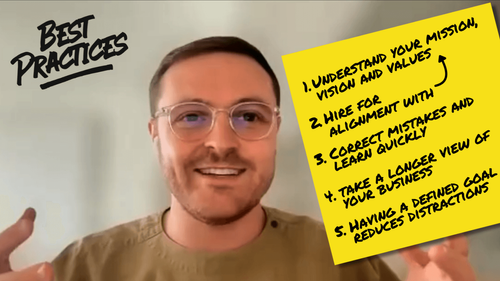
Best Practices for Building a Better Practice Through Continuous Training

After listening to Episode 12 of Best Practices with Host Steve Alexander and guest Kayla Ashlee, I’ve come to see training as one of the clearest signals of how a practice thinks about its future. Not onboarding checklists or annual CE requirements, but the ongoing choice to sharpen how the team and by extension the business actually operates day to day. It’s in those decisions that a practice signals what it actually values and how seriously it takes growth.
Check out the episode here
Anchoring Training to Your Mission with Intent and Purpose
What really stuck with me is that training only works when it’s anchored to something larger. If you don’t know the kind of experience you want to deliver, no amount of skill-building will feel cohesive. That’s why Steve and Kayla placed so much emphasis on mission, not as a slogan, but as a practical filter.
A real mission helps teams make better decisions, even when no one is standing over their shoulder. I challenge you and your team to craft a mission that naturally fits your practice’s culture and structure, so your service consistently reflects your core values
The practices worth admiring aren’t necessarily doing more, they’re doing things with more intention. Training becomes less about correcting mistakes and more about reinforcing shared standards. When everyone understands what the practice is aiming for, consistency stops being a struggle and starts becoming the default.
Differentiation Lives in the Small Moments
Another takeaway that hit me is how much differentiation lives in the small moments. Memorable experiences rarely come from massive investments. They come from teams trained to notice, personalize, and care about how patients feel when they leave. Those moments create stories, and stories are what patients remember and share. That same mindset applies to how practices show up online.
To me, your digital presence is an extension of the patient experience. When it feels generic or disconnected from what happens in-office, trust erodes. When it reflects real people and real values, it reinforces everything you’re trying to build inside the practice.
Reflection as a Daily Practice
The thread tying all of this together is reflection. The best practices don’t assume they’ve arrived. I revisit how we train, how we communicate, and how our mission shows up in real life. Continuous training is, and should be used as, a powerful tool for alignment as practices seek to grow.
That’s the difference I notice between a practice that’s simply busy and one that’s intentionally getting better. Small, consistent choices compound. Training becomes a culture, not a task. And that culture shapes the experience patients and staff carry with them every day.