Pulling Patient Benefits Part 2: Getting the Details Right

In Part 1, we established the foundation: who owns benefit verification in your practice, why you need to collect insurance information early (at scheduling, not check-in), and how this preparation protects your practice from claim denials and patient dissatisfaction.
Now we're getting into the specifics. What information do you actually need to pull benefits successfully? How do you capture it accurately? And how do you overcome the single biggest barrier to collecting medical insurance: staff discomfort in asking for it.
This is where the rubber meets the road. You can have the best intentions and the right person owning the process, but if you're missing critical information or your team is hesitant to ask for it, the whole system breaks down.
Required Information to Pull Benefits
Accurate benefit verification depends on accurate data. You can't verify benefits without the right information, and even minor errors can prevent eligibility verification entirely.
At minimum, practices should collect:
- Policyholder (guarantor) full legal name
- Policyholder date of birth
- Patient name and date of birth
- Policy number
- Insurance company name
Group numbers can be helpful but are often optional.
Even minor discrepancies (such as nicknames, reversed dates, or missing digits) can prevent eligibility verification. Collecting complete and precise information upfront saves significant time later.
Think about what happens when you don't have accurate data. You submit a claim using "Mike" when the policy lists "Michael." You transpose two digits in the policy number. You enter a date as month/day instead of day/month. Any of these small errors can cause an eligibility check to fail or a claim to be rejected.
By the time you discover the error, days or weeks have passed. You're calling the patient back to confirm information you should have had from the beginning. That's inefficient, it frustrates the patient, and it doesn't inspire confidence in your practice.
Scanning or Photographing Insurance Cards
Scanning or photographing insurance cards during intake is a best practice that supports accuracy throughout the revenue cycle.
Insurance cards:
- Reflect the payer's exact demographic data
- Reduce errors caused by verbal intake
- Allow staff to verify information during claim submission
This step is particularly important because patients may use nicknames instead of legal names. Numbers may be transposed when entered manually. Errors often surface only when a claim is rejected.
Having a scanned card allows staff to quickly resolve issues without contacting the patient or payer unnecessarily. When a claim gets rejected for a demographic mismatch, your team can pull up the scanned card, compare it to what was entered, identify the discrepancy, and resubmit. Without that scanned card, you're making phone calls and waiting on hold, all for information you could have captured in 10 seconds at intake.
Overcoming the Obstacles to Gathering Medical Insurance
One of the most common barriers to collecting medical insurance information is staff discomfort in asking for it. This discomfort is often communicated (consciously or unconsciously) to the patient.
When staff ask hesitantly or defensively, patients may question the request or refuse to provide information. The solution is not confrontation, but confidence and clarity.
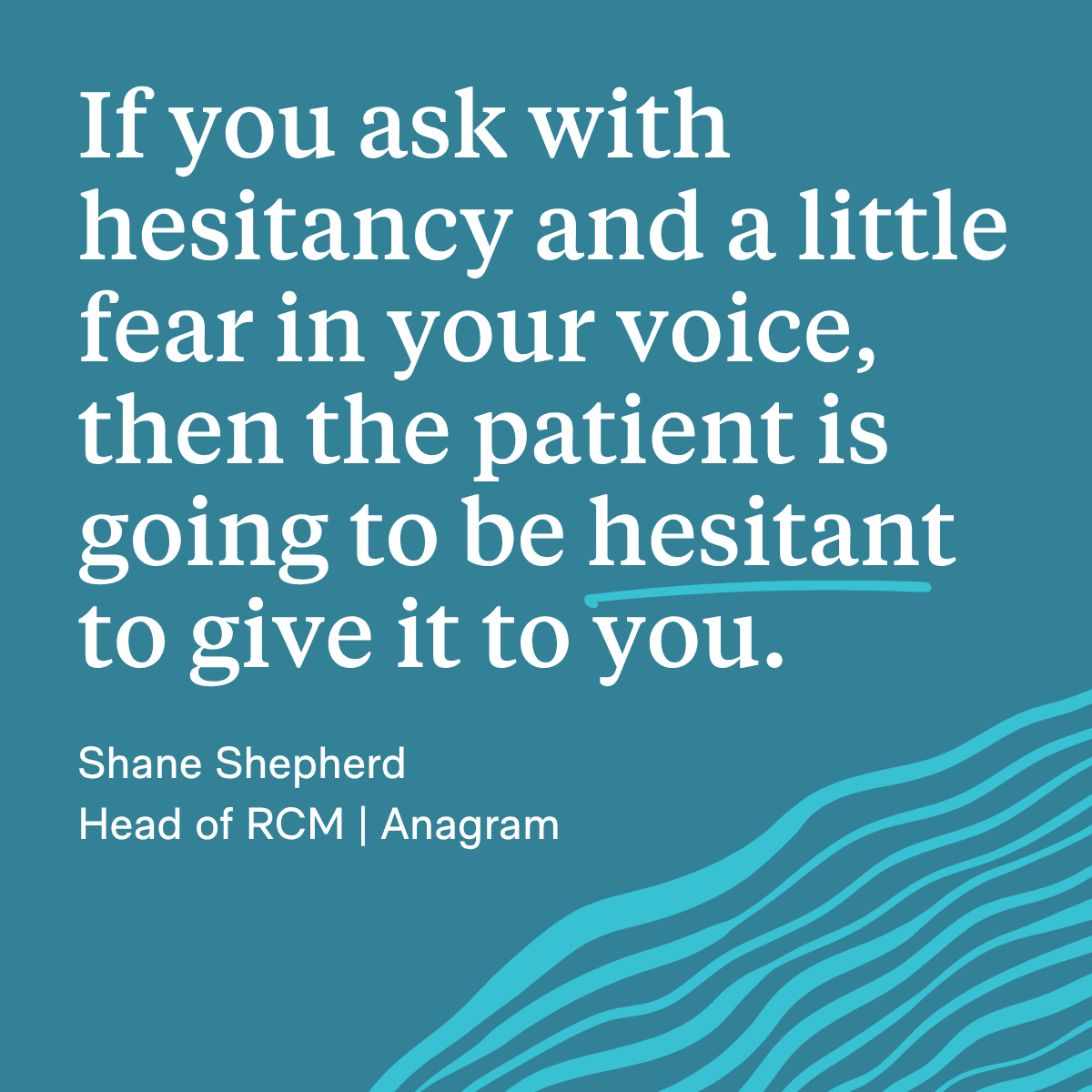
That's the reality. Your team's tone and confidence directly impact how patients respond. If your front desk sounds uncertain or apologetic when asking for medical insurance, patients pick up on that. They start wondering why you need it. They might push back or refuse. Your team needs to believe in why they're asking. If they don't, the patient won't either.
How Your Team Should Ask
Some things to keep in mind for your team as they present a request for medical insurance information to patients:
Be truthful- Don't make up reasons or overcomplicate the explanation. Honesty builds trust.
Center the patient's financial benefit- Frame the request around what's good for them, not what's convenient for your practice.
Avoid adversarial language- Don't position insurance collection as something patients have to do. Make it collaborative.
Normalize the request- Treat it as a routine part of the process, not an exception or special circumstance.
Take the following as an example: “There are times when using your medical insurance can lower your out-of-pocket cost. We like to have it on file so we can use all of your coverage appropriately if needed.”
That's it. It's simple, truthful, and patient-centered. It doesn't sound defensive or apologetic. It normalizes the request. Work with your team to adapt the above in ways that let them ask with confidence. Role-play if necessary. Practice until it becomes second nature. The goal is to remove the awkwardness and hesitation so asking for medical insurance becomes as routine as asking for vision insurance.
Most patients readily comply when the request is framed this way. In rare cases where a patient still declines, the practice may proceed, but should recognize the increased risk of billing complications later. Importantly, this approach also trains staff to speak confidently about insurance, reducing anxiety and improving consistency across the entire practice. When your team is comfortable asking for information, that confidence translates to every other insurance-related conversation they have with patients.
Bringing It All Together
Pulling patient benefits successfully requires three things: the right foundation, the right information, and the right approach from your team.
You need someone who owns the process and understands both the clinical and financial stakes. You need to collect insurance information early, before the patient arrives. You need complete and accurate data, and scanned cards to back it up. And you need a team that can ask for medical insurance with confidence instead of hesitation.
When all of these pieces work together, the benefits compound. Patients feel informed and respected. Staff experience less stress and fewer confrontations. Providers can focus on care. And your practice collects what it's entitled to collect for services rendered.
Even if you had perfect software or unlimited resources, the bulk of your success still lies within preparation, consistency, and a commitment to continuous improvement. Build the foundation right, train your team to execute with confidence, and build a culture of continuous refinement.
That's how you create a benefits verification process that actually works.