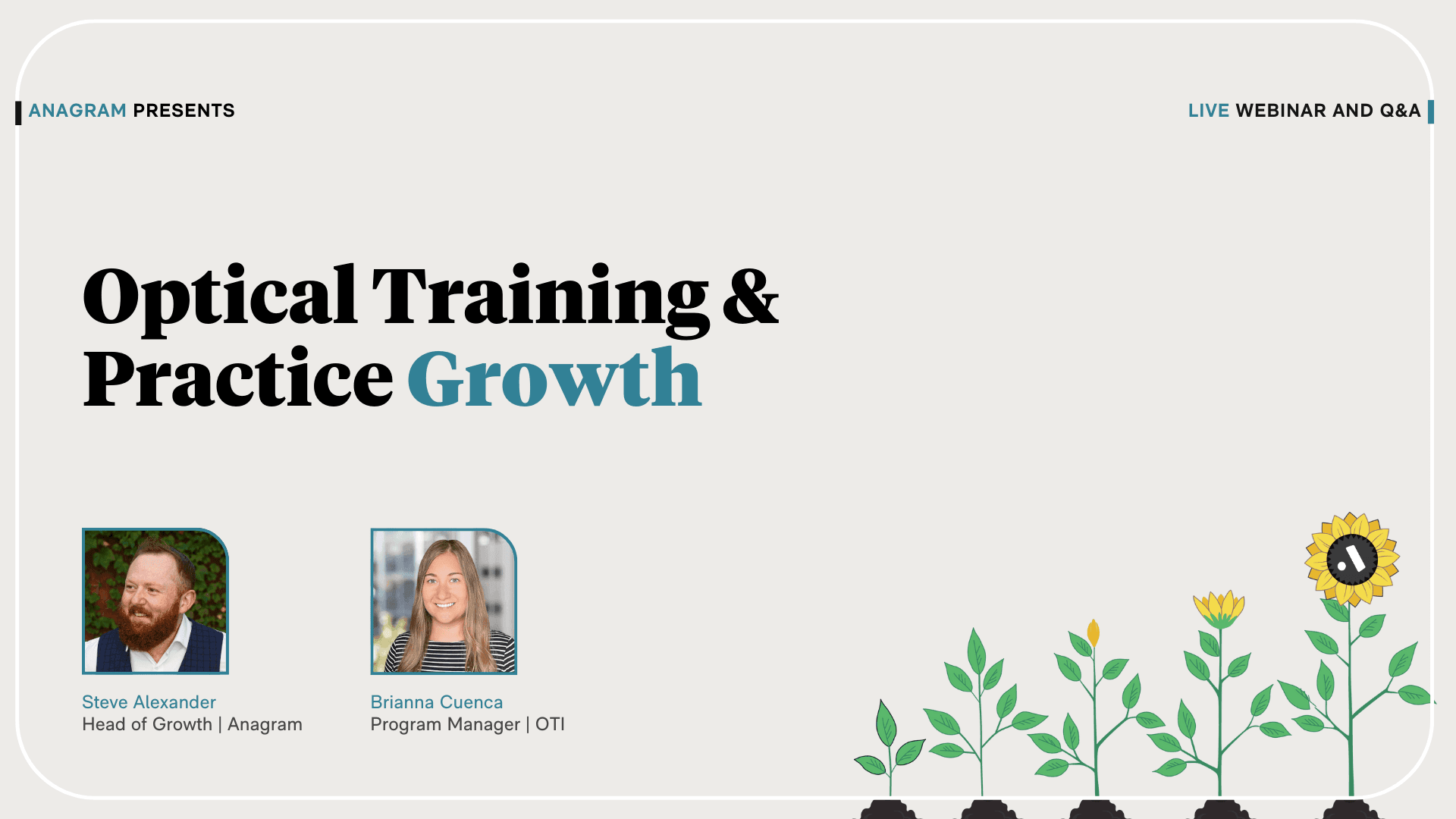
Anagram and OTI on Optical Training and Practice Growth

After watching our recent webinar with host Steve Alexander and guest Brianna Cuenca from the Optical Training institute (OTI), I was reminded just how much a practice’s approach to training signals its priorities and future. The everyday decisions teams make to sharpen collaboration show how seriously a practice takes its investments in growth and demonstrates what a practice truly values.
Confidence as a Core Goal
Structured training often emphasizes technical skills, but what really resonated with me is that confidence matters just as much as capability. Staff who feel empowered are willing to take initiative, ask questions, and engage more meaningfully with patients and in so doing create a more memorable experience.
The presence of confidence shows in every interaction: patients sense it, errors decrease, and workflows run smoother. Beyond immediate outcomes, confident teams develop a culture of ownership and pride; a group that doesn’t just “do their job” but actively shapes the patient experience and supports each other. Over time, these small, deliberate practices compound into significant, long-term improvements for both staff and patients. By contrast, imagine the above in the absence of that confidence. It paints a starkly different picture, doesn’t it?
Making Training Work in the Real World
Time is always a constraint, a truly limited resource. Relying exclusively on your strongest staff to carry key knowledge can create capability gaps in the event of their absence. The practices I’ve seen succeed intentionally schedule training, standardize onboarding, and leverage flexible approaches like micro-learning or short digital modules.
These methods reduce dependence on any one person and ensure that learning is continuous, accessible, and adaptable to real-world demands. Rather than viewing it as a large, one-off project, training should be woven into the day so it doesn’t compete with the work that keeps the practice running.
Why This Matters
What resonated most for me is how these training choices ripple through every patient interaction. From a simple frame recommendation to a follow-up conversation, staff who are confident, aligned, and supported create moments patients remember. Training is a lens through which the entire patient experience is filtered. And when these moments are consistent across every interaction, a practice’s reputation, patient trust, and staff satisfaction all improve.
My Takeaway
Structured training is culture in action. The difference between a practice that’s busy and one that’s continuously improving comes down to small, consistent choices made intentionally. Watching Bianca and Steve reminded me that when training is practical, purposeful, and connected to real-world outcomes, its impact goes far beyond skills, shaping the daily experience for patients and teams alike. The most powerful takeaway: investing in training thoughtfully doesn’t just improve today, it compounds into a stronger, more resilient practice that grows with intention.
Watch the Webinar Here!